









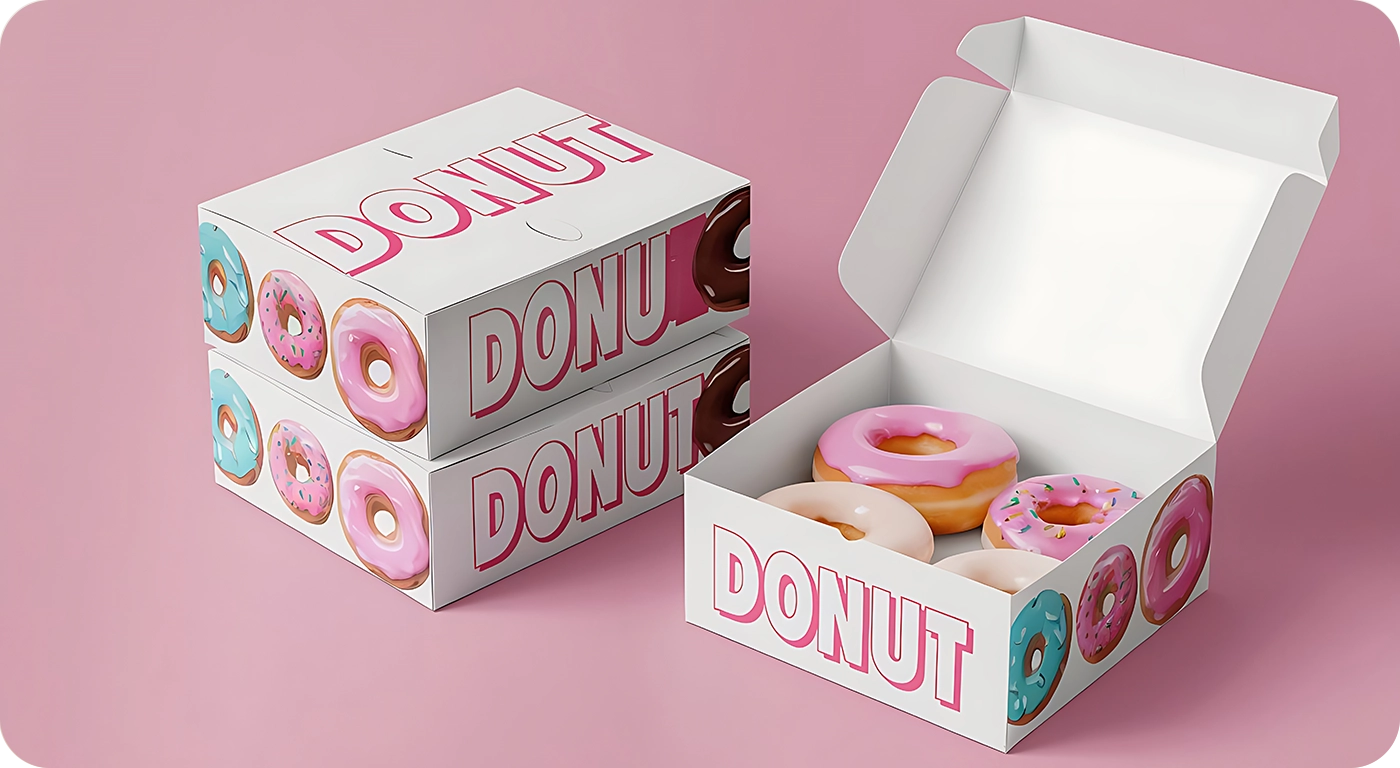
Donut packaging sits at a curious intersection: it needs to deal with soft textures, sticky glazes, delicate toppings and variable shapes, all while looking appealing and functional. Whether it’s a single treat handed over the counter or a box of a dozen on a delivery platform, donut boxes have their own set of challenges that go beyond simple containment.
Unlike rigid items, sweet pastries resist predictable packaging behaviour. They pile on toppings, ooze glazes and have surfaces that shift with temperature and movement. A good donut box makes that complexity look effortless.
When Packaging and Product Behaviour Meet
Donuts are unlike most bakery products. Their finishes can be sticky, their shapes irregular and their surfaces matte, shiny, crumbly or soft. These characteristics influence packaging choices more deeply than they might for bread or cakes.
Here are a few factors that make donut packaging different:
- Irregular geometry because round shapes with icing or toppings don’t always stack neatly
- Surface moisture as glazes and fillings can ooze or soften if trapped
- Heat and condensation interplay as fresh donuts retain warmth, but that warmth can become condensation if ventilation isn’t thoughtful
- Presentation count because customers often eat with their eyes first
So, packaging has to do more than “hold” the product, it has to manage it.
Structural Choices That Match Donut Realities
The right structural design for donut boxes doesn’t look accidental. It often incorporates subtle practical solutions:
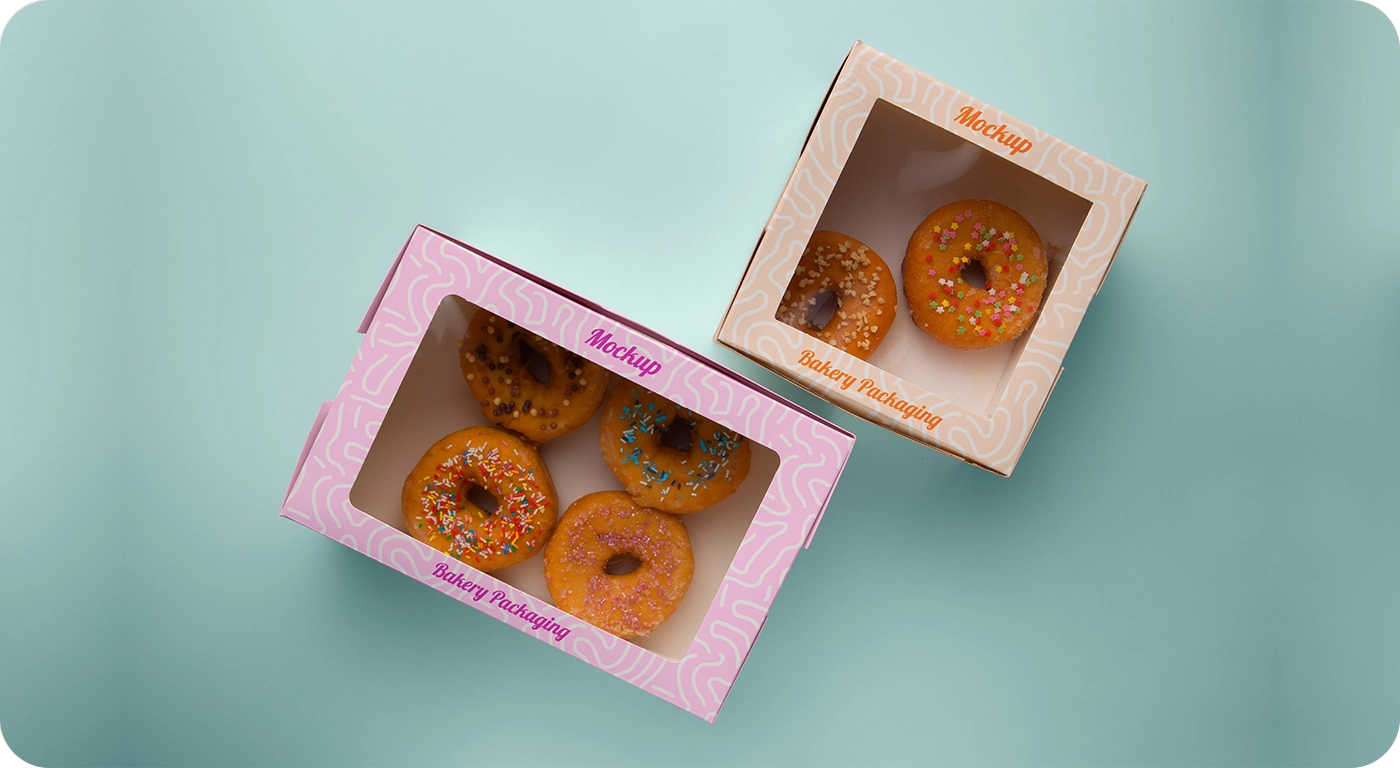
- Window Cut-Outs
Small transparent windows (PET or cellulose film) let customers see the product without opening the box as visibility drives selection. - Partitioned Interiors
Adding internal partitions or custom inserts come in handy when donuts are being sold in multiples, allowing them to stay in place while preserving icing and toppings. - Ventilation Features
Strategic ventilation features help release steam without drying out the product to achieve a balance that keeps donuts looking and tasting fresh. - Stackability With Stability
Designs need to stack well without crushing the pastries beneath in retail displays or fridges.
These details often go unnoticed until they’re missing, and then the packaging suddenly feels like the weak link in the experience.
Material Matters: From Bakery to Box
Different bakery environments and business models call for different materials in custom donut boxes. Paperboard or Cardboard remains the go-to for most donut boxes for it is printable, sturdy and widely accepted in recycling stream and works well with food-safe coatings that prevent moisture. On the other hand, grease-resistant paperboard or internal layers help keep the box looking clean and prevent soggy spots. These coatings are water-based or biodegradable alternatives to traditional wax. Corrugated material options are used for large quantities or delivery orders as they provide extra rigidity and stack strength.
Each material choice influences how the donut is presented, handled and ultimately enjoyed.
Design That Reflects the Bakery’s Identity
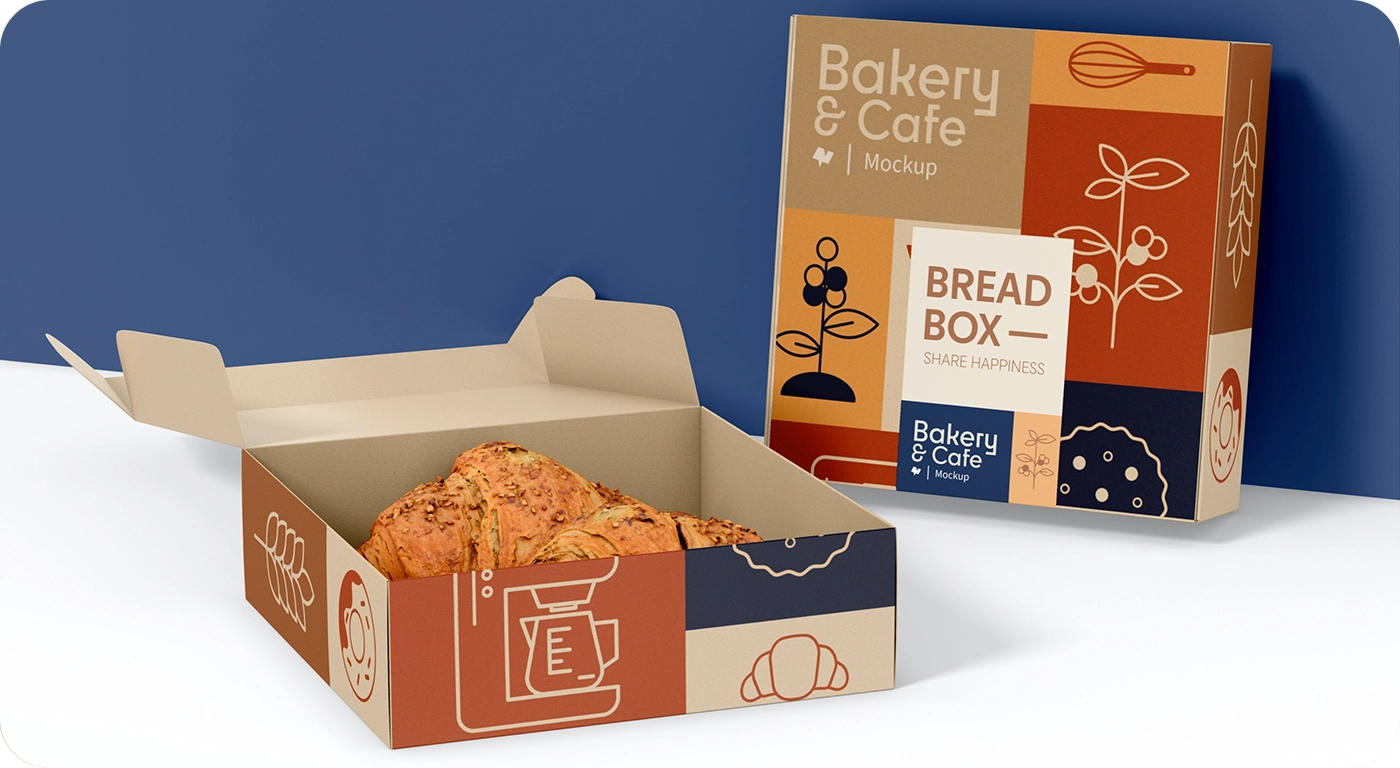
Donuts might be fun, but branding them requires clarity and expression.
Effective donut box design often leans into:
- Colour Psychology and Mood
Bright, playful colours align with fun and indulgence, while muted palettes can suggest artisanal craftsmanship. - Typography That Tells a Story
Fonts and wording can hint at humour (for quirky brands) or quality (for premium bakeries). - Spot Graphics vs Full Coverage
Some brands use minimal graphics with strong typography, while others use full-bleed artwork to create impact. - Seasonal and Limited-Edition Graphics
Special runs such as Valentine’s heart boxes, Christmas sprinkle themes, festival tie-ins, add variety and urgency to purchases.
A thoughtful design doesn’t need to be loud; it needs to be cohesive with the product and the brand’s identity.
Retail Pathways: Counter, Shelf and Online Orders
Donut boxes serve three main sales environments, each with unique demands:
- Walk-in Retail
Here, packaging works alongside product display. Neat boxes that can be stacked, aligned and labelled help staff manage queues and offer easy customer pick-ups.
- Point-of-Sale Counters
Smaller single-donut packs or treat-for-one boxes near checkouts appeal to impulse purchases. Clarity and quick product viewability matter here.
- Online and Delivery
Orders placed through apps or websites add another layer of requirements: the box must survive handling, insulation (if paired with hot drinks), and handling by drivers.
Seasonal and Event-Driven Packaging
Donut makers often experiment with themed flavours, pumpkin spice in autumn, pastel colours for Easter, chocolate hearts in February, and packaging becomes part of that conversation.
Creative seasonal design goes beyond simple labels. It can include:
- Themed wrapper bands
- Seasonal shape windows
- Special edition box prints
- Collectible series designs
These elevate the product beyond ordinary retail into a felt experience that customers talk about.
Seasonal runs also give brands a chance to test new design ideas without committing to full permanent overhauls.
Good donut packaging doesn’t call attention to itself by struggling, it lets the product sparkle, while making life easier for bakeries, staff and consumers alike.